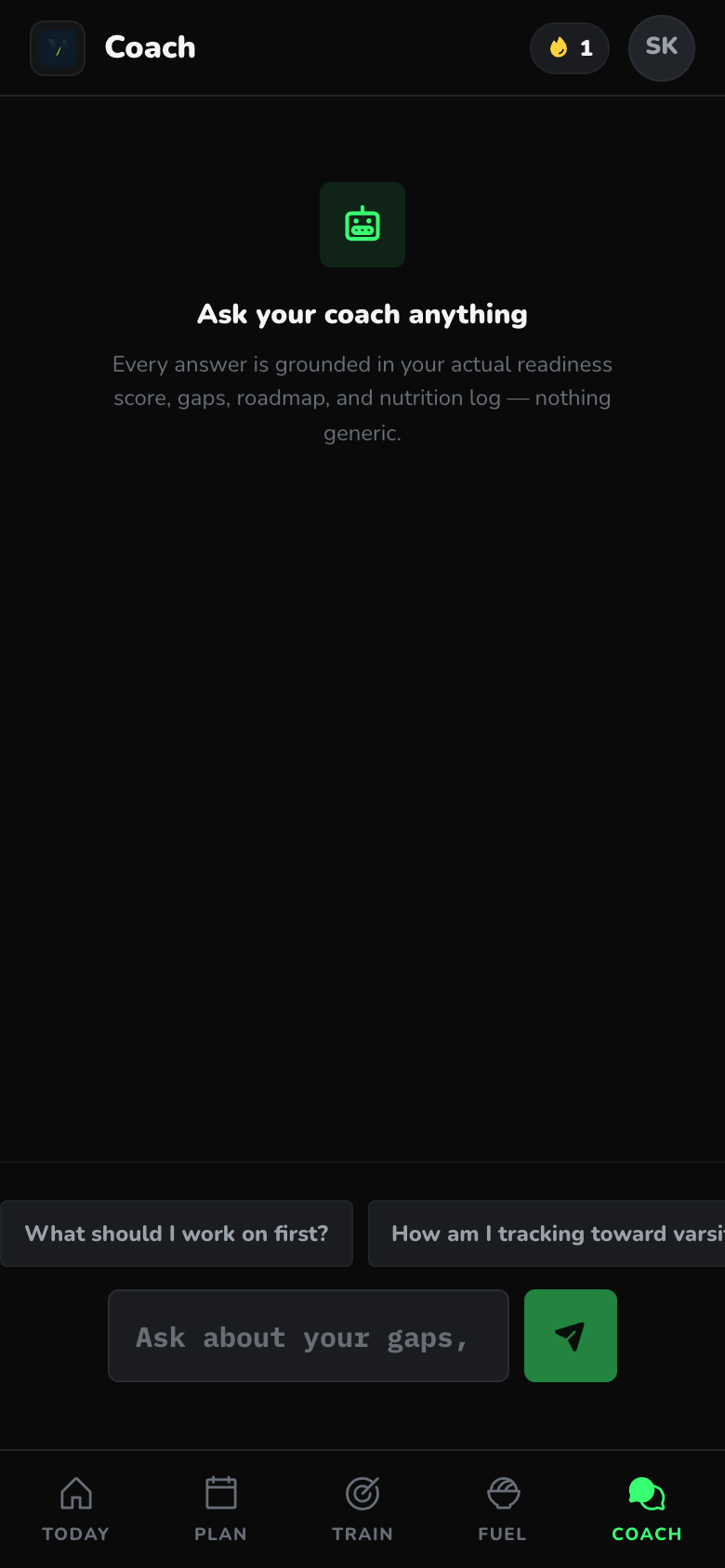
VarFoot
Give high-school players a week-by-week route to varsity.
Sports
0 -> 1
Role
Product, design, full-stack build
Timeline
LexHack 2026
team
Small team
platform
Responsive web
The Real Problem
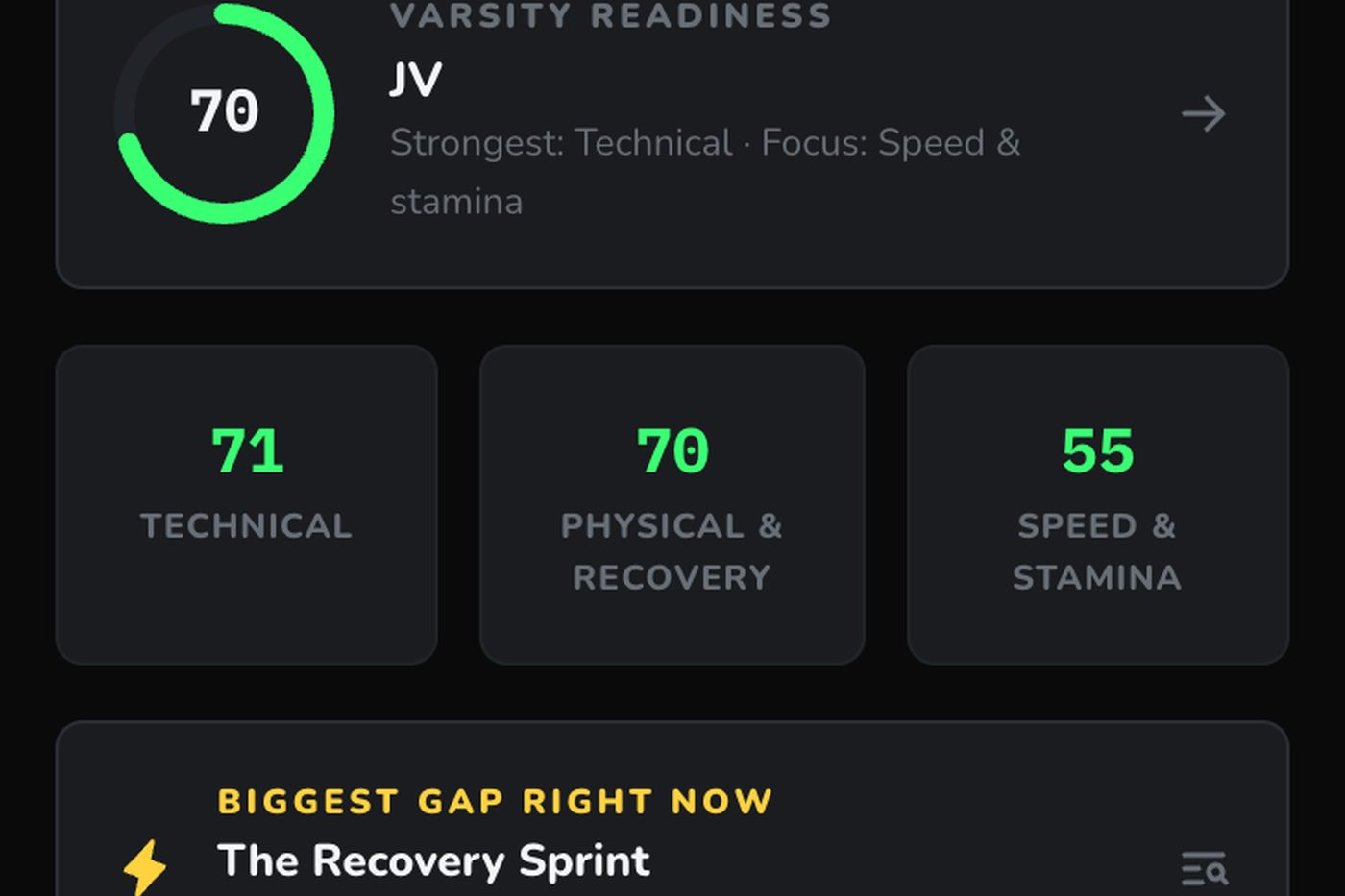
Young players know the outcome they want. Make varsity. Get faster. Become more consistent. What they usually do not have is a credible route from the current version of themselves to that outcome.
Generic drills are easy to find, but they do not explain which weakness matters most or how a week of training should change when the player's numbers change.
A goal becomes useful when it turns into the next measurable week.
Finding the Fix
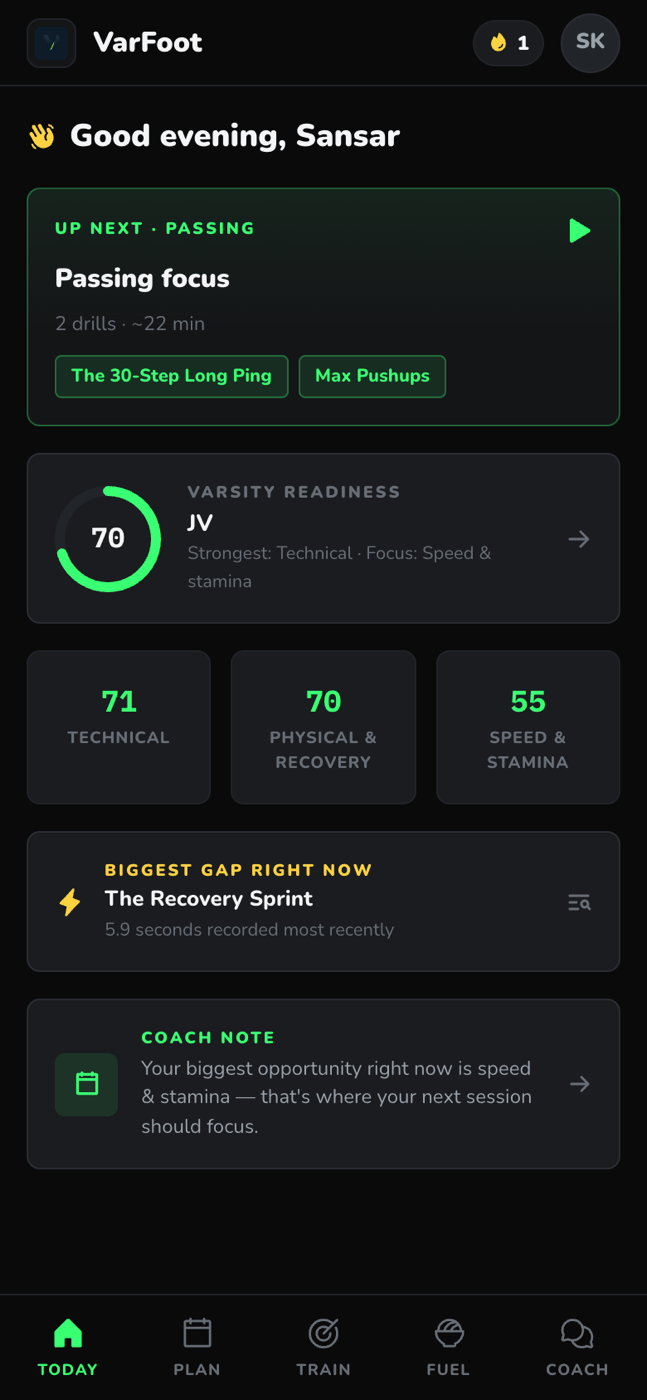
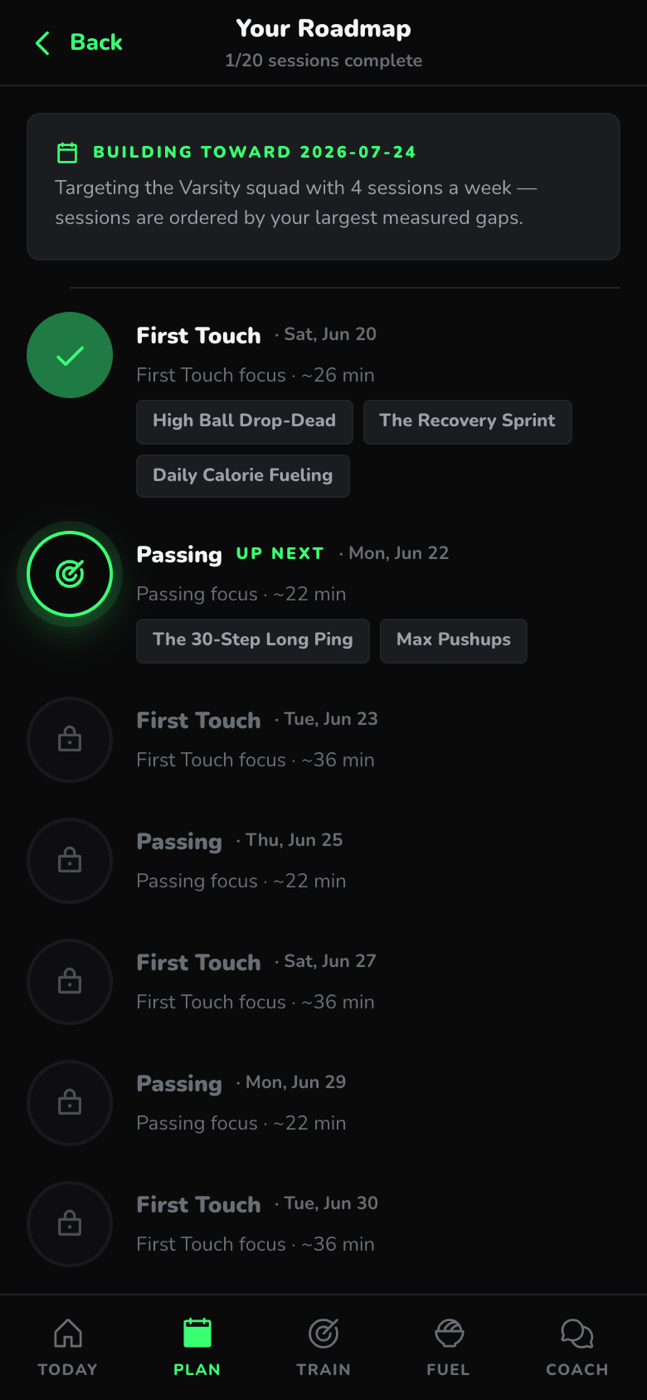
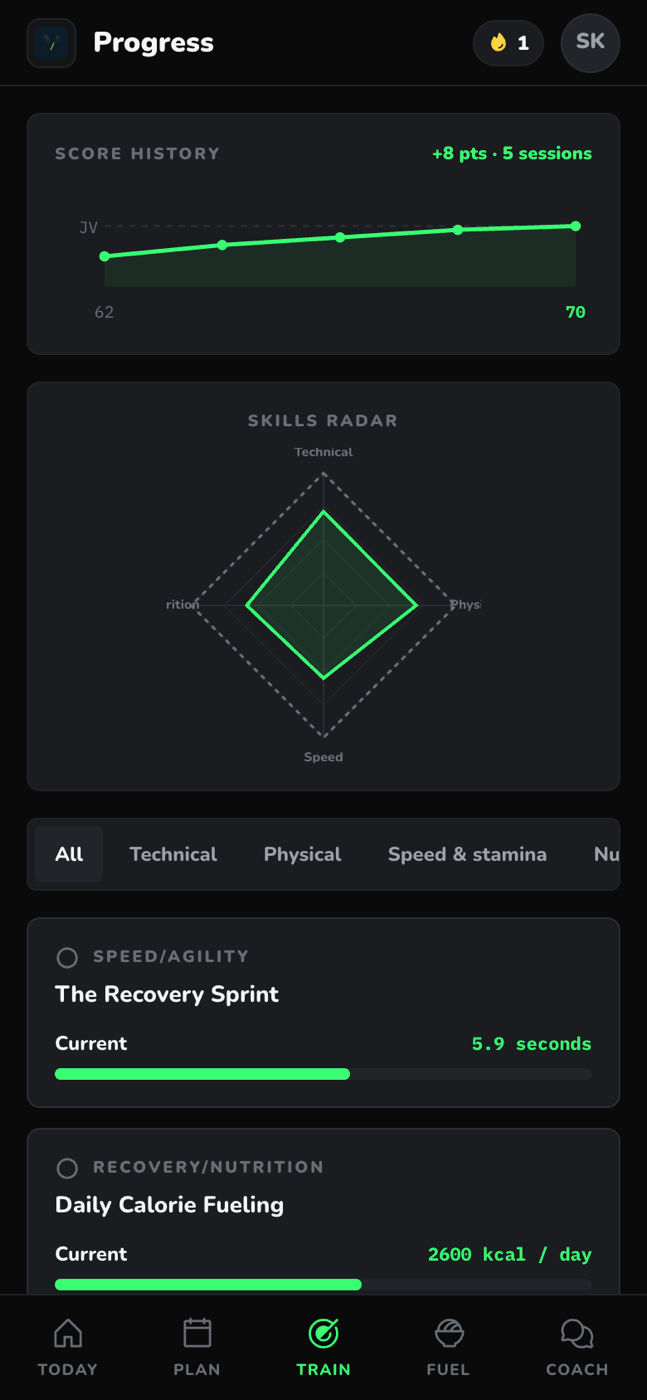
VarFoot starts with an assessment, compares the player's inputs to varsity-level benchmarks, and turns the gap into a focused weekly plan.
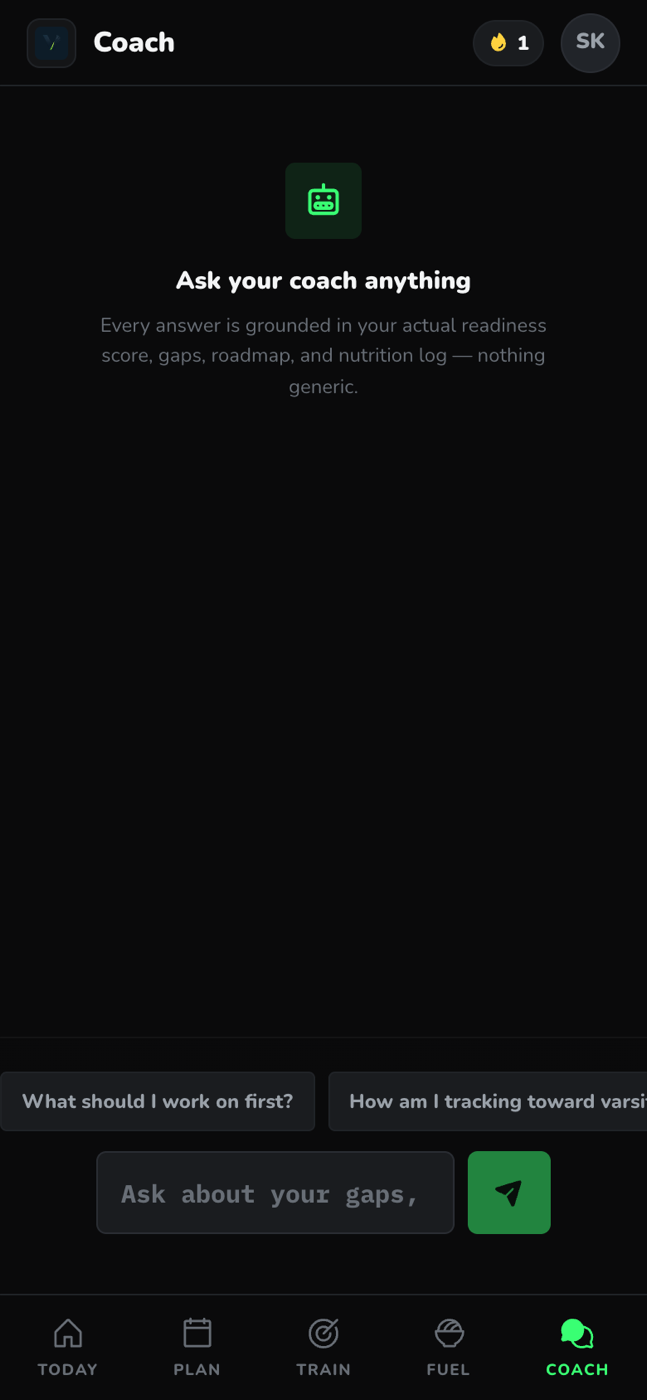
Gemini helps shape the plan, while the application keeps the output inside a predictable training structure.
Capture a small set of meaningful player metrics.
Show the benchmark gap without ranking the player through a black box.
Generate a weekly plan with clear session goals.
Use progress to adjust what comes next.
What Actually Happened
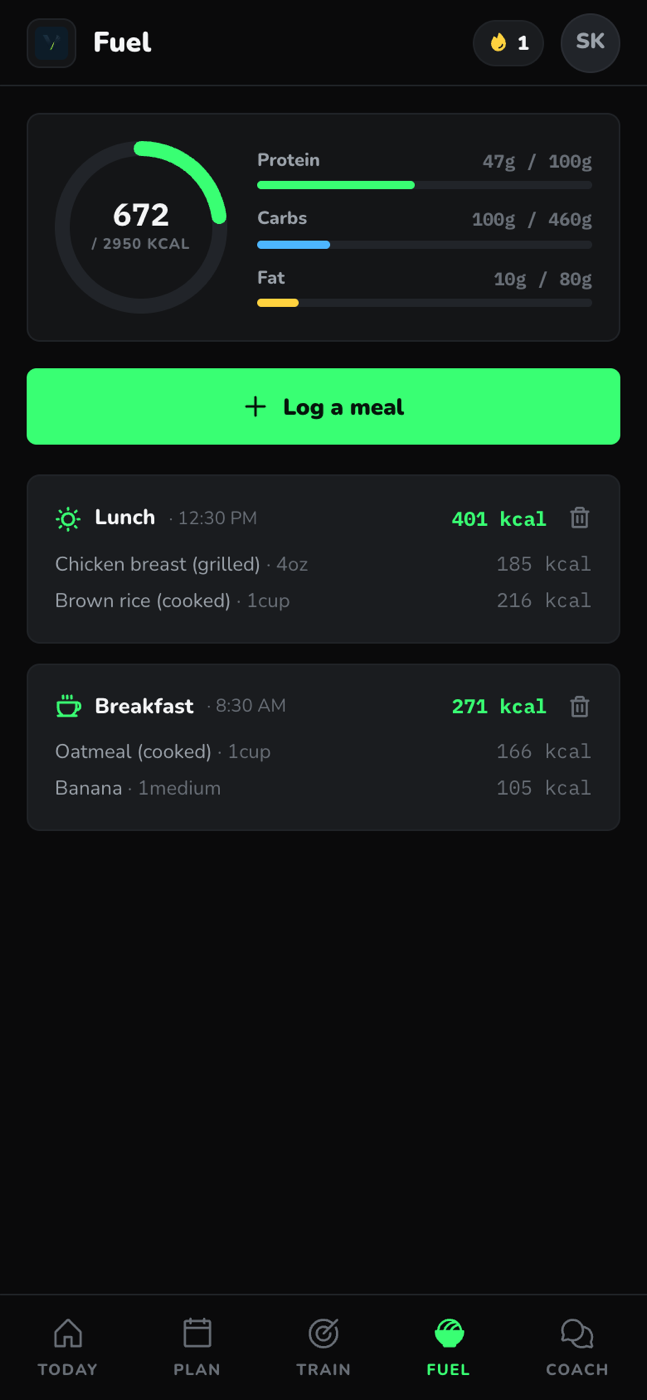
The time box made scope the hardest problem. We could build a broad soccer platform or make one loop feel complete. We chose the loop: assess, compare, plan, train, and return.
The implementation used Next.js and TypeScript for the product shell, Supabase for persistent player data, and Gemini for structured plan generation.
What Changed
The early concept led with an AI coach. The finished experience led with the player's gap. That made the recommendation feel earned because the user could see what the system was responding to.
We also replaced a long onboarding flow with a compact assessment. Every extra question had to prove that it changed the plan.
What I Had to Work With
VarFoot was built for LexHack 2026, so time and attention were fixed. There was no room for a perfect dataset or a full coaching curriculum.
The project needed a credible product story, a working data loop, and an interface that could be understood in a short demo.
What I'd Do Differently
I would involve a coach earlier to review the benchmark model and training sequence. A strong interface can make a recommendation legible, but domain review is what makes it dependable.
I would also test the return experience with real training logs.
What I Learned
AI is most useful here when it adapts a system, not when it impersonates an expert. The product needs stable rules, visible inputs, and a clear place for judgment outside the model.
I also learned that the best hackathon scope is a full loop with fewer features.