Concord
Turn scattered health data into a doctor-ready picture.
Health
Flutter companion
Role
Research, product, design, build
Timeline
Ongoing
team
Independent build
platform
Flutter / HealthKit

The Real Problem
Health data is abundant between appointments and strangely hard to use inside one. Steps, sleep, heart rate, symptoms, medications, and notes live in different places. By the time a clinician asks what changed, memory has to do the work.
Concord began as a hobby project around a practical question: could a phone prepare a compact, useful summary without pretending to be a doctor?
The goal is not a diagnosis. It is a better starting point for a human conversation.
Finding the Fix
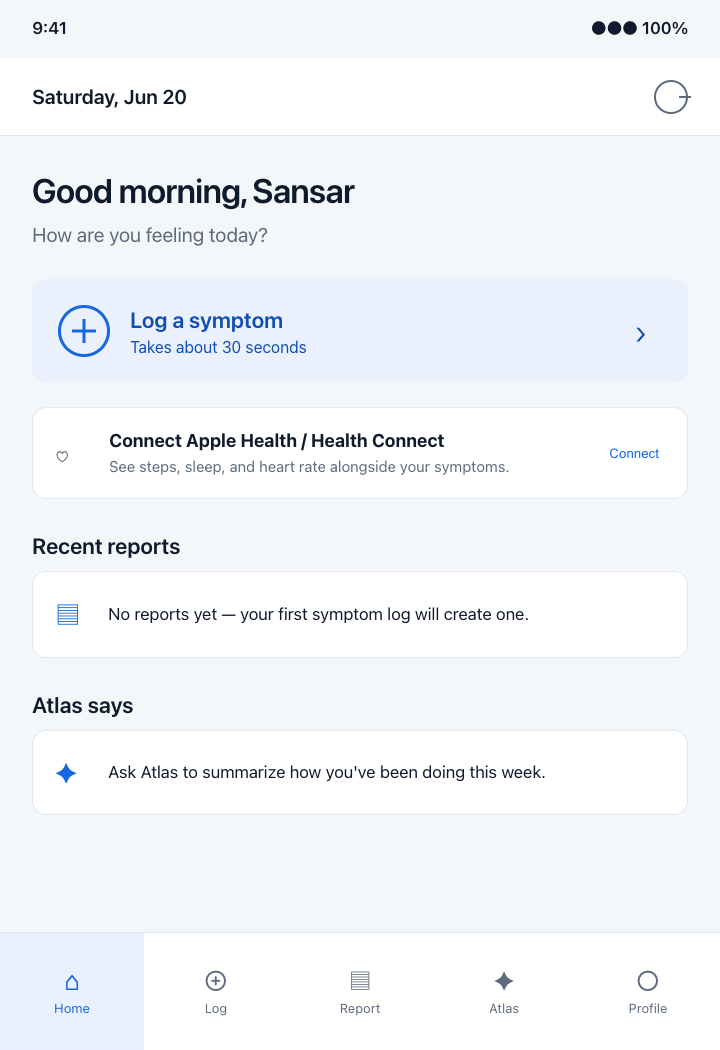
I centered the product on a doctor-ready summary. HealthKit supplies objective trends, while lightweight symptom capture adds context devices cannot infer. Atlas helps organize that information into questions and observations.
The safety boundary is explicit. Concord does not diagnose, prescribe, or replace medical judgment. It reveals patterns, shows where the data came from, and helps a person arrive prepared.
Collect health trends with clear permission boundaries.
Make symptom capture fast enough to use on an ordinary day.
Separate observed data from generated interpretation.
Create a concise summary that can be reviewed before sharing.

What Actually Happened
The first interface was a dashboard. It looked complete and answered almost nothing. Too many charts gave every signal equal weight, while the important connection between a symptom and a trend stayed buried.
The product became more useful when I designed backward from a future conversation. Each screen now earns its place by helping someone remember, compare, or explain something relevant.
What Changed
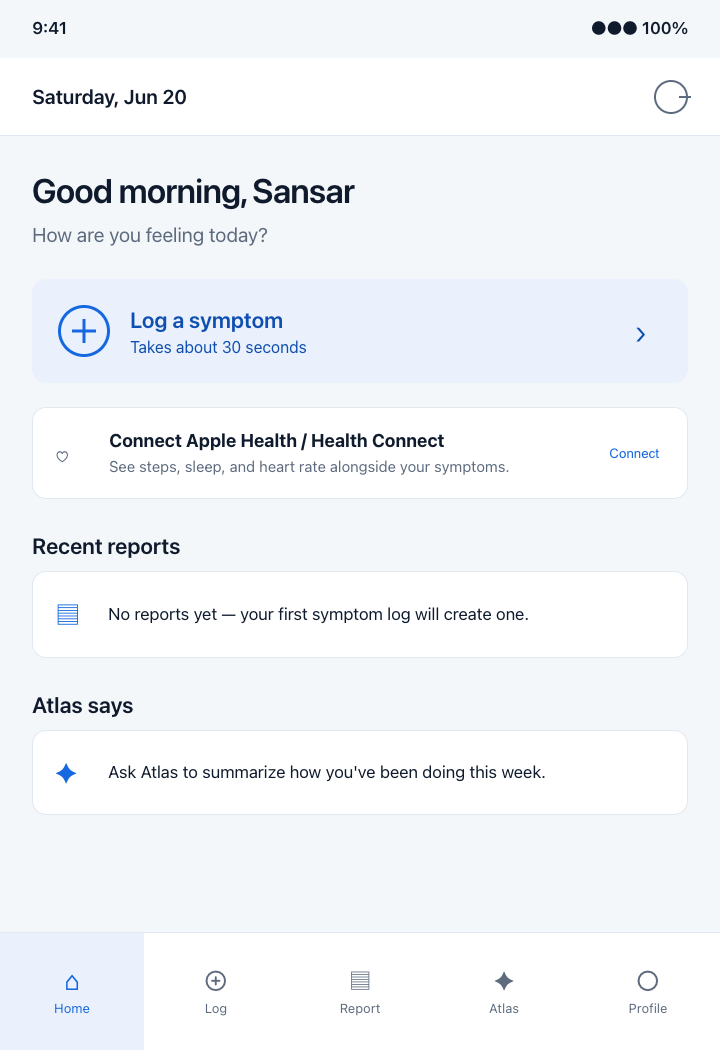
Daily entry moved from a form to a short check-in. Trend views became annotated rather than decorative. Atlas shifted from an open chatbot toward a guided interpreter with visible sources and narrow prompts.
The summary is now the center of the system. The widgets and daily capture exist to make that summary better.

What I Had to Work With
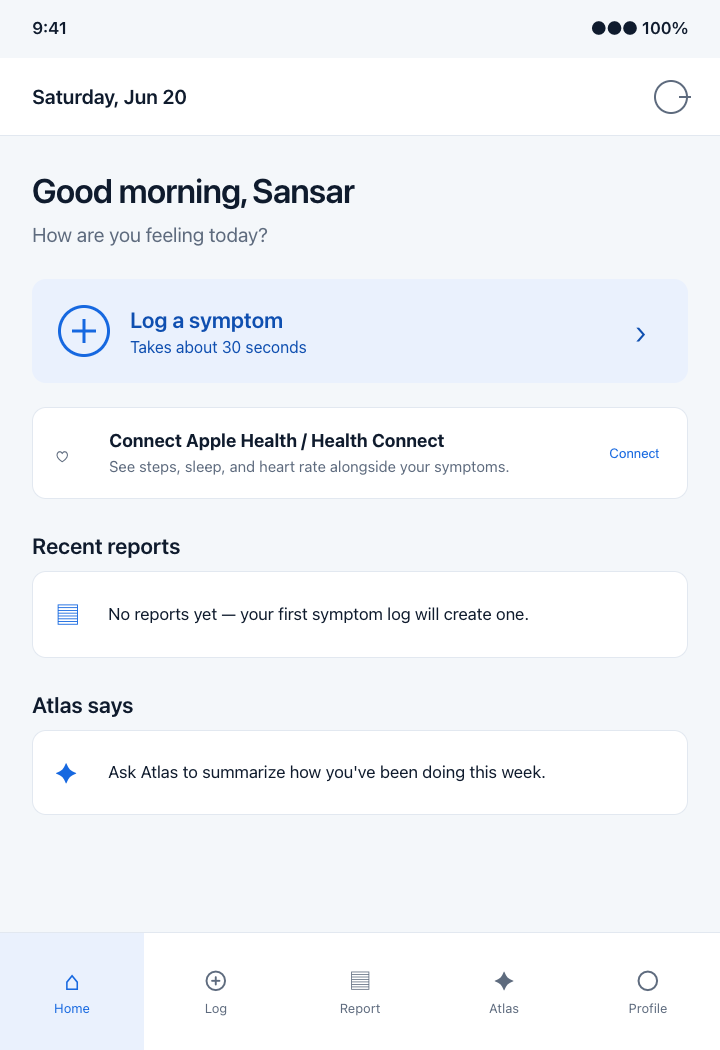
Concord is an active side project with a public Flutter app and server codebase. Production credentials and any health data remain private.
Health data demands a stricter bar than an ordinary experiment. Consent, provenance, clear deletion paths, and a narrow product claim matter from the beginning.
What I'd Do Differently
I would begin with the visit summary and test it with representative sample data before designing daily tracking. That would expose which inputs genuinely matter and prevent collecting data simply because HealthKit makes it available.
I would also write the safety language alongside the product copy from day one.
What I Learned
More personal data does not automatically create more understanding. The product has to preserve provenance and show why two observations might belong together.
I also learned that restraint can be an active design choice. A narrow assistant that cites what it sees is more useful than a confident one that acts like it knows the person.